

Consolidating vendors may simplify your dealership’s marketing, but what happens to the content and tracking you’ve already invested in? Sommer White, Wikimotive’s Senior Strategic Accounts Manager, shares three dealership examples illustrating the risks of leaving SEO work and historical measurement behind during a website migration—and why your vendors should act as partners throughout the transition.
No matter the industry, vendor transitions are rough. Having been on the client side of these changes in the past, I know the excitement of a shiny new tool or service and how tempting it is to rush the process so you can start seeing results. There are some tools this may work for, but when it comes to SEO, you simply can’t take a shortcut—especially if you are also migrating to a new website platform. If your new vendor is pushing you to cut out your old vendor, RUN.
Regardless of your current relationship, simply walking away from a legacy SEO vendor without ensuring that the years of work you built together are protected is a great way to watch your rankings tank. You don’t have to take my word for it—I have receipts.
Dealer A: A New Website Without the SEO Content or Historical Tracking
Dealer A wanted to test a single-vendor solution. They decided to migrate their website to this vendor and move all digital marketing to the same company. While this strategy may seem easier, results aren’t easy, and an all-in-one solution is rarely effective, as you end up with a “jack of all trades” instead of a subject matter expert.
Dealer A hadn’t warned us of the upcoming transition, though, so we couldn’t warn them. Their new vendor chose not to migrate any of the SEO content driving authority to Dealer A’s website. They also chose to spin up a new GA4 property—which is perfectly fine—but did not install the historical GA4 tag on the new website, so Dealer A lost their ability to compare metrics.
Was that intentional? I have to believe it was. Since there was only a single vendor involved in the migration, they were able to avoid revealing this to the client—until we saw the data loss and stepped in.
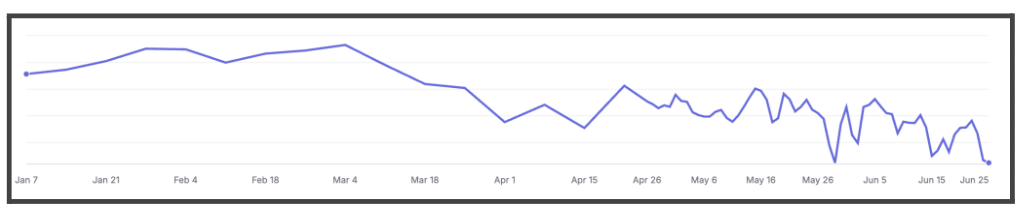
The historical GA4 tag was installed, but we were unable to convince Dealer A to republish the SEO content. The graph below shows their average organic rankings. Want to take a guess at when they migrated?
Dealer B: Hundreds of Pages Left Behind
But wait—there’s more.
Dealer B was a client of more than five years and decided it was time for a change—and, again, a single-vendor solution. We were aware of the planned transition, but the website migration in this case did not occur while Wikimotive was still involved.
A few weeks after leaving our service, their shiny new vendor convinced them to bring only the top handful of pages to the new website, leaving behind hundreds of other authority-driving pages.

Dealer C: Restricted Access and Lost Historical Measurement
Not convinced yet? No problem.
Dealer C was also a legacy client. We had worked solely with the Dealer Principal for five years. A new GM came on board and convinced the DP to allow him to move all services to—you guessed it—a single-vendor solution he had worked with in the past.
In this case, Wikimotive was still providing service to the client when they migrated, but the new vendor and new GM would not allow us website access. They chose not to migrate the content from our time together or install the historical GA4 tag. The decision to remove historical data is another huge red flag with any vendor.
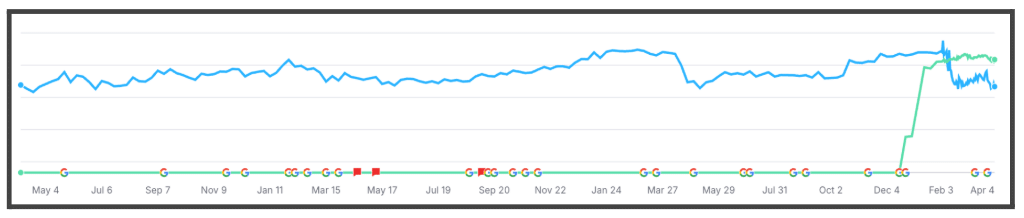
While we were able to show the tanking organic ranking results to the Dealer Principal, he said he had to let this new GM make the decisions if he was going to hold him accountable for results. We’re still in touch with the Dealer Principal, and I expect this dealership to return when the experiment has concluded. In the meantime, a brand-new competitor has overtaken their position.
Your Vendors Should Be Your Partners
While this story is about SEO, the real takeaway I’d like you to have is that your vendors should be your partners. They should be looking out for you, your data, your historical performance, and your future results.
Sure, this is business, and it’s appealing to move to what seems to be an easier or less expensive solution. If a potential new vendor isn’t protecting you and your data, though, then you are just a number to them, and the solution will fail.
The market may disguise that reality for a time, but before long, it will be obvious. By then, will it be too late to recover?