

This Month from Wikimotive…
Surface-level success can conceal what is actually happening underneath.
An AI visibility score can rise without producing meaningful opportunities. Paid search can look efficient while charging you for customers already looking for your store. A website migration can appear seamless while valuable content, tracking, and authority quietly disappear.
This month, we’re looking beyond the numbers, reports, and appearances that make success easy to claim. We’re also expanding the ways dealers can access the research, practical guidance, and informed perspectives needed to recognize what matters—and act on it.
Because the goal isn’t to generate more activity. It’s to understand what that activity is actually accomplishing.
Your AI Visibility Score Went Up. What Did Your Dealership Gain?
Your vendor says you’re showing up more often in ChatGPT. There’s a report, a higher score, and a list of optimizations taking credit for the improvement. Before you call that progress, ask what those appearances actually represent. Were you recommended to someone choosing a dealership, or cited as a source for someone researching a vehicle’s towing capacity three states away?
Those are different outcomes. A report that combines them can make a dealership look successful without establishing whether it reached a relevant buyer.
In October’s State of AI Search briefing, I shared findings from Wikimotive’s ongoing visibility study. We’re examining prompts covering dealership reputation, dealer discovery, and inventory discovery to understand what appears alongside prominent dealer results—and whether the evidence supports what dealers are being sold.
For inventory discovery prompts, 86% of cited dealer pages contained written content, and 69% contained inventory. Only 35% of observed cited dealer instances involved the store with the most inventory among its primary competitors. Having the biggest lot wasn’t a requirement.
Meanwhile, llms.txt files, special schema markup, and FAQ formatting did not emerge as consistent differentiators. That doesn’t make technical SEO irrelevant or make useful FAQs a bad idea. It means checking those boxes isn’t evidence of a competitive advantage.
The same scrutiny belongs in your reporting. A citation doesn’t establish that a shopper visited or contacted your store. A local recommendation can influence their choice even without a click. And because responses vary between repeated prompts, one favorable screenshot doesn’t prove that an optimization worked.
Before buying another AI package, ask yourself:
- What work does it add beyond competent SEO?
- What evidence supports it?
- How will success be evaluated?
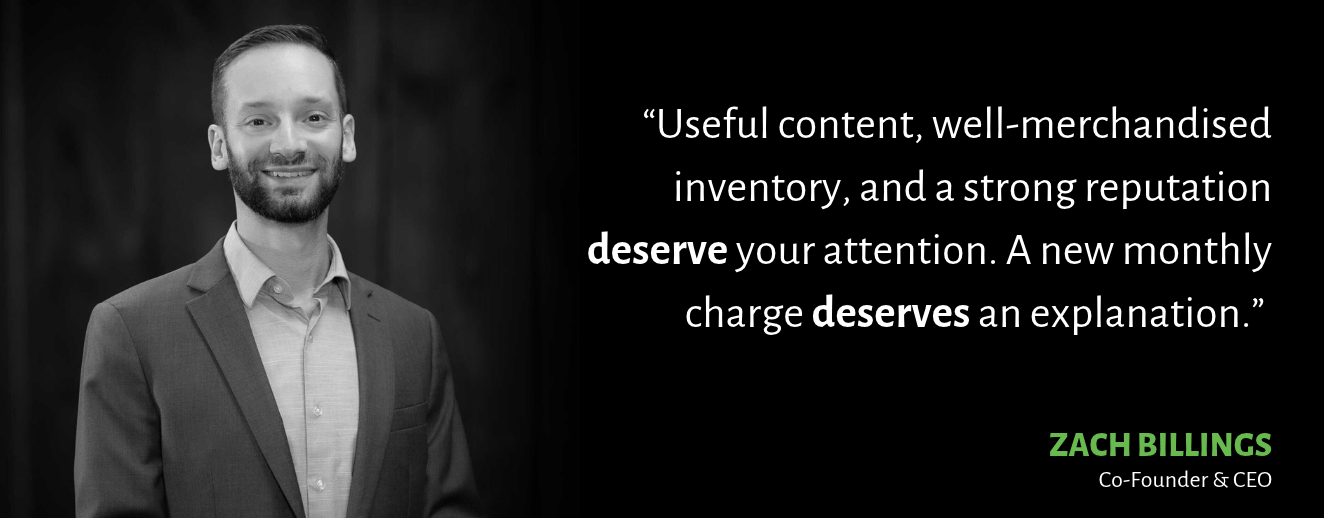
Useful content, well-merchandised inventory, and a strong reputation deserve your attention. A new monthly charge deserves an explanation.
Have questions about what AI search actually means for your dealership? Bring them to November’s live Q&A. Register for Thursday, November 5, at 1 PM ET, and let’s talk through what deserves your attention—and your budget.
Google May Be Charging You for Your Own Name
By Jen Odom
Just about everyone is running paid ads these days. And you SHOULD! But what you spend your money on matters.
As I am sure you know, you put a keyword into Google Ads, and then when a customer searches that keyword, your ad is shown. But what you might not know is that sometimes you can have a keyword such as “GMC Dealer” and Google will show results when someone searches for your store name; this is called a close variant.
When a customer searches your store name, your Google Business Listing should show, and you should be at least number one, if not one and two, in the organic results. So your site is all over those search results without you needing to pay for it.
Customers looking for your store will often click on the first listing they see with your store name on it. This means if you are paying for that search, they will click on the paid ad, which costs you money. Even if that paid ad wasn’t there, there are still 2-3 other places right at the top they would click that don’t cost you additional money.
The money you spend on branded searches should be spent on searches where customers don’t know they need to be shopping your store yet, usually net new customers, versus existing customers.
Why Do Agencies Do It?
Why do agencies run branding keywords and even talk you into running them? The answer is simple: it’s easy results.
If someone is searching for your store by name, they are much more likely to click that ad, meaning a higher click-through rate (CTR) for the agency. They are also likely to convert because they are looking to call the store for service, or their car is already in your shop and they need to check on it, or they have already bought from you and are looking to do so again.
This leads to better performance for the overall account to report to you. It is the easy button in SEM. There is no work needed to deliver a high CTR, a high conversion rate, and a much lower cost per click (CPC). For an agency, this is a gold mine; for you, this is wasted money. You would have received those conversions without paying for them.
Is There a Place for It?
In a highly competitive market, it MIGHT be worth bidding on your name. I only suggest this for stores that have their town in their store name, and their OEM doesn’t restrict going after competitor names. And even then, ONLY do so after looking at the auction insight report and the search term report to see what your competitors are going after.
If your competitors have less than 30% impression share for your name, there is no need to run it. If they are at 50% or more, it would be time to discuss bidding on your name. The next step is to look at the search term report that goes with that auction insight report. This will show you whether they are actually going after your name or if they are going after a broader term that also returns your name.
The only other time I recommend this is when you are going through a name change or URL change, but even then, it is a limited-time thing. But be careful; most agencies want you to run your name, so make sure you are looking at the reports with them.
What Can You Do About It?
Talk to your agency and ask the right questions.
Often, if you ask your agency what you are spending on branding, they will give you the budget they have specifically for branding keywords. What they don’t tell you is all the times your brand name was paid for because Google thought it was a close enough match to another keyword. This is why your budget does not equal what you actually spent.
Ask for the search term report. This report shows you exactly what customers searched before clicking on your ad. Now filter to anything with your store name in the search term. I promise you this number will shock you. I have seen a lot of stores that were told they were only spending $500 on their name, when in fact, they were spending close to $2,000. And if you are running PMax campaigns, this can even be closer to $3,000 a month spent on searches you could have received for free.
Once you figure out how much is being spent, ask your agency to add your store name as a negative in all campaigns. This will stop Google from matching your store name to close variant searches.
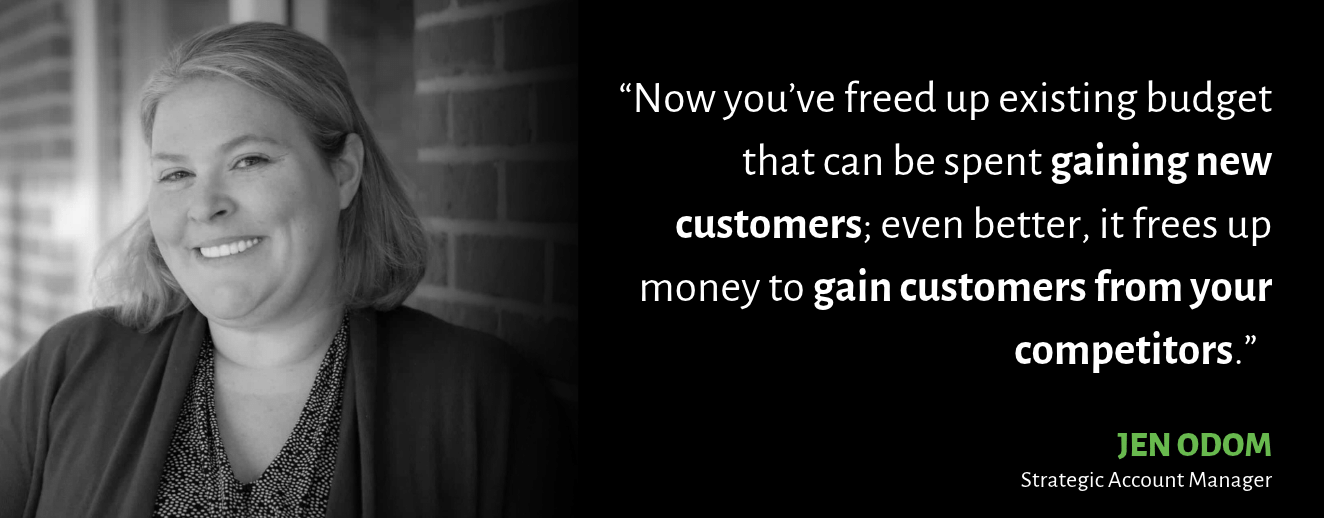
If your store is highly targeted by competitors, you can run a single campaign for branding with a lower budget and still add a negative for your brand name in all other campaigns. Now you’ve freed up existing budget that can be spent gaining new customers; even better, it frees up money to gain customers from your competitors.
A Website Migration Can Leave Your Best Work Behind
You love your home. It’s where the heart is, after all. However, sometimes it’s time to make a move. You understand the time and energy that goes into moving to a new home, but you might not think of migrating your website in the same way.
A bad move might mean leaving behind something you can’t bear to be without, like a cherished family heirloom or a family member’s ashes. A bad website migration might significantly affect your bottom line. Losing conversions on your website can lead to fewer opportunities in your CRM, resulting in fewer sales overall.
Deciding What to Pack
You’re moving, but now you have to decide: what are you going to take with you? These are decisions you don’t want to leave solely to your new website provider. Migrations can be long projects with lots of moving parts. Your website provider’s goal is to get you back up and running with as little downtime as possible. You need someone whose role is to help you decide what to pack, ensure it moves properly, and check that it ends up where it belongs.
It’s your content that helps your website rank. You need a practiced hand to go through and tell you what to keep, what to get rid of, and what to move and improve later on. Which pages rank and which pages don’t? Which content converts, and which content doesn’t? You may have one thousand pages you don’t need to bring, or fifty pages that are all necessary. Your SEO provider needs to be heavily involved in this process to make sure you aren’t creating new problems for the future.
Coordination Is Key
Your website provider has a very important job in this process. It is making sure that your website is ready to go on your launch date. Introduce everyone who will be involved in your migration as early in the process as possible. Ideally, as soon as you know, everyone else should know. This allows everyone to get their work done ahead of time.
In my previous role as a marketing manager at a dealership, we underwent two website migrations in eight years. One was an absolute catastrophe. The other was smooth sailing.
The first time, I didn’t make sure our vendors were communicating and had the information they needed. We launched with missing content, broken tracking events, and no usable data. The second time, I got everyone involved from day one, and everything worked as it should from the get-go.
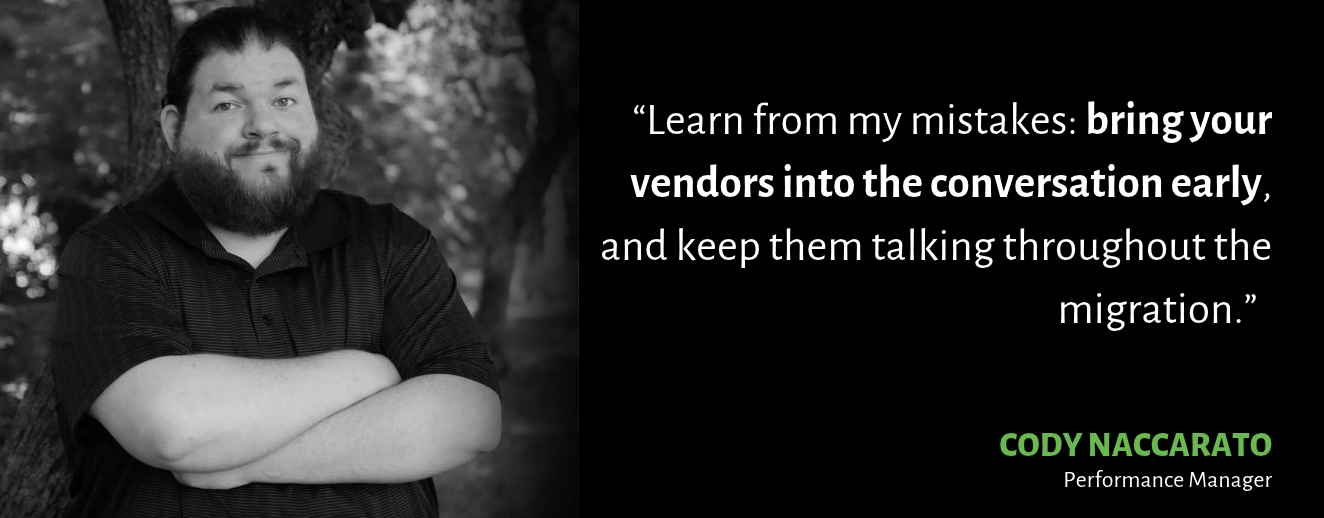
Learn from my mistakes: bring your vendors into the conversation early, and keep them talking throughout the migration.
See What Broke in the Move
You should always mentally prepare for something to break during any move. You and your team will immediately focus on the major concerns:
- Is your inventory displaying?
- Are those incentives correct?
- Where is your trade tool?
Customers on your website will notice those problems, too.
What about the things you won’t notice that are missing? Your SEO provider can answer the questions you don’t think to ask:
- Are your phone calls being captured?
- Are form submissions from all of your tools being recorded?
- If not, which tools stopped sending data during the migration?
- Is website traffic being tracked properly?
- Why do we have more or less traffic than before?
In the same way that you wouldn’t want your SEO vendor building the code for your new website, you don’t want your website provider trying to answer all of these questions alone. Their focus will be on the big-ticket items needed to get your site live, which can leave SEO priorities—like preserving content, redirects, and search visibility—overlooked.
The best migrations are those in which everyone does their part to ensure the best possible outcome for the store. The migration process does not end when the site goes live. There is more work to do in the days and even weeks after.
One Big Happy Family
From my experience, there are two kinds of migrations. There are migrations where everyone is on the same page and working together, and others where people don’t know what’s happening. Those without clear communication face challenges and difficulties, both short-term and long-term. Introduce your vendors to each other with emails and phone numbers, and get the ball rolling.
There are many subtle nuances that go into an effective migration, some of which may be invisible to you. That’s okay. You aren’t expected to be the expert. You need the right person for the job, and in most cases, your SEO provider is the right provider to help you migrate your content effectively.
Follow the Signal to Better Decisions, and Better Outcomes
By Jason Cook
There is no shortage of automotive marketing content.
Your inbox knows it. Your LinkedIn feed knows it. That webinar invitation you deleted ten minutes ago definitely knows it.
And, yes, even Wikimotive is creating more content than ever. But for us, it’s not about volume or even the possibility of conversions. The metric is simple: first, does it help dealers better understand what they’re seeing and make better decisions, and second, are we meeting dealers where they are?
This is the standard behind everything we’re building—provide dealers with a signal to follow, content designed to cut through the noise, offering real insights and actionable takeaways.
Our monthly State of AI Search sessions give dealers a place to examine current research, question the conclusions, and ask Wikimotive CEO and Co-founder Zach Billings what the findings mean for their stores.
Zach’s October cover feature in AutoSuccess challenged dealers to cut marketing waste without reflexively cutting the marketing-producing opportunities. His appearances on Car Dealership Guy have brought that same evidence-first perspective to an even wider audience, while Dealer Diagnostic gives him room to answer the questions dealers are actually asking about search, AI, vendors, and measurement.
We’re expanding the number of Wikimotive voices contributing to the conversation.
We’ve recently released SEO First Steps, where I sit down with Director of Search, Meaghan StPeter, to create a clear entry point and make a complex discipline more understandable and actionable. If that sounds familiar, scroll down. Different dealers consume insights differently, so we’ve expanded her ongoing newsletter series into a conversational video series.
We’ve also rolled out Q&A The Wiki Way, a blog series that taps into specialized skill sets of the Wikimotive team to serve up both candid and cited insights. The real relationship between SEO strategy and content? The unspoken promise and peril of AI-assisted workloads? The damning effect of hasty marketing change-ups? Kelsea Filleul, Jessica Baron, and Josh Wynne are just some of the leading minds who are looking out for your best interests.
Plus, Sommer White has rolled out her Off the Lot series, featuring candid conversations with dealers around the country and designed to highlight individual victories and struggles, alongside the most universal of sentiments, to offer a true pulse on our industry.
In the weeks to come, But What If You’re Wrong? will feature Victoria Chadbourne and Julia Reimers from our Support and Special Projects department, challenging common dealer preconceptions with the kind of truth valuable to any dealership’s success.
And rest assured, our In Search Of podcast will soon return, welcoming insights from dealers, vendors, and outsiders alike.
These aren’t different messages created to fill different channels. These are different pathways into the same conversation: what dealers need to know.
Some dealers want a 45-minute presentation followed by a live Q&A. Some want a focused YouTube episode they can watch over lunch. Others have 60 seconds between meetings and would rather get one useful idea from TikTok.
We want to meet all of you where you are.
That also means showing up where dealers will be. Zach will continue taking these conversations directly to the industry through upcoming speaking engagements at MRC 2026 and NADA 2027.
More platforms. More formats. More voices. One standard:
Does this help a dealer understand what deserves attention, make better decisions, or achieve better outcomes?
If the answer is no, it’s just more noise.
Visit the WikiBlog, subscribe to the Wikimotive YouTube channel for the full conversations,or follow our TikTok when a more digestible bite fits your day better.
Follow the Signal.
Step Nine: Giving Words to Your Pictures
As we near the end of our first ten steps, it’s time to take a look at alt text—a small SEO element that can easily be forgotten yet can help Google better understand what an image displays and how it relates to the page.
What Is Alt Text? Why Does It Matter?
Alt text is a short description of an image that is added to the page’s code. It was originally designed to describe images for visitors who can’t see them, but it also gives search engines additional information about the image and the page it appears on.
While it’s important to remember that alt text is not a general ranking factor for pages, and that its SEO impact is primarily related to image search results, it should nevertheless not be ignored. Providing accurate alt text gives Google more context about your content and can help images appear among relevant search results.
How to Write Better Alt Text
The goal of alt text is simple: Describe the image accurately and naturally.
Good alt text should:
- Clearly describe what is shown in the image
- Be relevant to the page
- Use important keywords (when they naturally apply)
- Avoid keyword stuffing
For example, an image of your dealership’s service department could use alt text like “Toyota service center in Los Angeles” if that accurately describes the image. Simply using “Toyota service” on every image, regardless of what it shows, doesn’t provide much useful context.
Making Alt Text Part of Your Strategy
Alt text may not have a major impact on your traditional search rankings, but it is another opportunity to make your website easier for search engines to understand. Taking the time to accurately describe the images on your site can support image search visibility while providing additional context about your content.
With the foundational work in place after steps one through nine, next month we’ll wrap up the first ten steps by looking at how to monitor your results, use SEO tools to measure success, and continue improving your website over time.