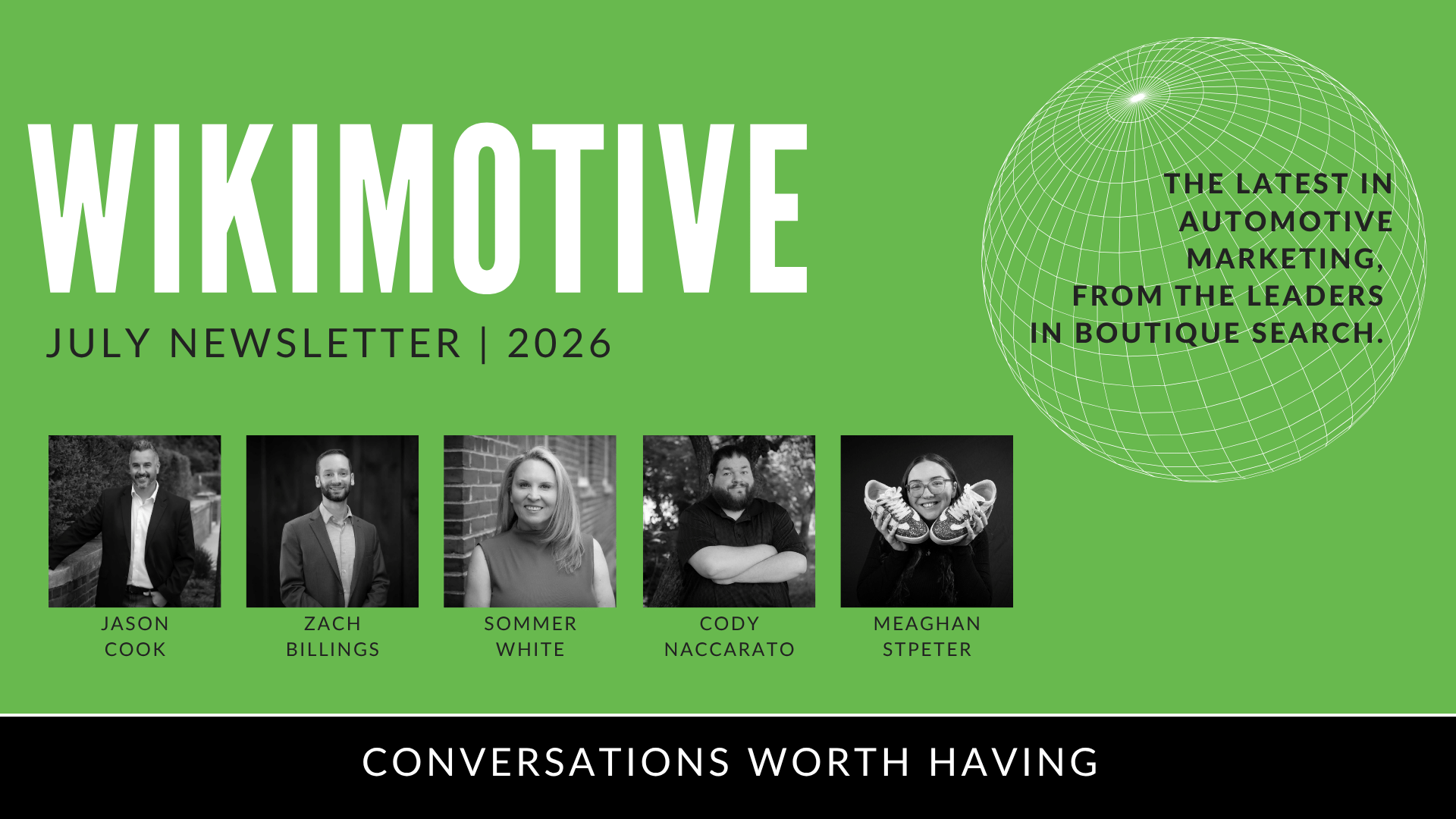
Conversations Worth Having | July 2026 Newsletter
This Month from Wikimotive…
Five articles. Five different topics. One common thread:
If an idea can’t withstand scrutiny, it probably doesn’t deserve your attention.

Unsubscribe? Weird Flex, But Okay
By Jason Cook
Growing up, my father would say, “You can’t bullsh*t a bullsh*tter”—and, in 25 years of sales and marketing, that credo has expanded to include, “You can’t sell to a salesman, and you can’t market to a marketer.” Ah, the joy of B2B!
You’ve read enough forecasting, seen enough platform announcements, heard enough hot takes, and sat through enough demos for “game-changing” marketing strategies to last a lifetime. Another acronym, another dashboard, another so-called “thought-leader” insisting that the rules have changed—again. The hard part isn’t keeping up anymore. It’s figuring out what deserves your attention in the first place.
Maybe we need fewer people trying to predict the future, and more people making sense of the present.
The conversations worth having rarely start with certainty; they start with curiosity. On our team, we start by asking why dealers across the country are running into the same challenges. We test assumptions against data. We invite perspectives that don’t always agree, align, or validate. Sometimes the conclusion reinforces conventional wisdom, and sometimes it demystifies myths or debunks misconceptions. Either way, the goal is never to win an argument; it’s to help dealers make sense of the present.
That’s our standard.
The topics change. Search evolves. Technology advances. Consumer expectations transform. Leadership challenges shift. But the approach remains the same…
- Listen first.
- Ask better questions.
- Follow the evidence.
- Respect the complexity.
- Reject easy answers.
If we’re contributing to the industry’s noise, we’re failing that standard…
But if we’re helping dealers pause, think differently, challenge assumptions, or simply better understand the business they’re navigating today, then we’re having the conversations we set out to have—because better decisions start with better understanding.
So, read the newsletter. Join the discussions on LinkedIn. Watch or stream the podcasts on your commute or during lunch. Attend the monthly search briefings and the conference workshops.
Challenge us.
Agree with us, or disagree with us.
The conversation is the point.

AI Search Is Changing. Good SEO Isn’t.
By Zach Billings
Despite the growing narrative that SEO is giving way to an entirely new discipline, the research points in a different direction. AI search isn’t replacing good SEO—it’s reinforcing the same fundamentals that have driven results for years.
As we’ve continued studying how platforms like ChatGPT and Gemini recommend dealerships, one trend has remained remarkably consistent: The strongest signals aren’t proprietary GEO tactics or AI-generated content; they’re useful, consumer-focused content, well-merchandised inventory, authentic customer reviews, and clear answers to shoppers’ questions.
That shouldn’t be surprising, as AI platforms and traditional search engines share the same objective: connecting consumers with the most relevant, trustworthy information available. The interface may be changing, but the incentives haven’t.
That’s also why dealerships should be cautious about chasing the latest “GEO” shortcut. The better question isn’t, “How do we optimize for ChatGPT?” It’s, “How do we become the best answer for the customer we’re trying to reach?”
For savvy dealers, the answer may look familiar: continue investing in the fundamentals that have always mattered.
- Create genuinely helpful content that answers shoppers’ questions.
- Keep inventory accurate, complete, and well merchandised.
- Build and protect a strong portfolio of authentic customer reviews.
- Provide clear, transparent buying information that earns consumer trust.
- Use AI to accelerate good work, not replace expertise.
These investments will strengthen your traditional SEO today while positioning your dealership for greater visibility in AI-powered search tomorrow.
AI is an incredibly valuable tool, but it doesn’t replace expertise. The dealerships that will thrive won’t be the ones chasing every new acronym; they’ll be the ones committed to giving shoppers the clearest, most trustworthy information—regardless of where tomorrow’s search begins.

Buyer Beware: Sharky Single Vendor Solutions
By Sommer White
No matter the industry, vendor transitions are rough.
Having been on the client side of these changes in the past, I know the excitement of a shiny new tool or service, and how tempting it is to rush the process so you can start seeing results. There are some tools that this may work for, but when it comes to SEO, you simply can’t take a shortcut—especially if you are also migrating to a new website platform.
If your new vendor is pushing you to cut out your old vendor, RUN.
Regardless of your current relationship, simply walking away from a legacy SEO vendor without ensuring the years of work you built together is protected is a great way to watch your rankings tank. You don’t have to take my word for it—I have receipts.
A Tale of Three Dealers
Dealer A wanted to test a single vendor solution.
They decided to migrate their website to this vendor and move all digital marketing to the same company. While this strategy may seem easier, results aren’t easy, and an all-in-one solution is rarely effective, as you end up with a jack-of-all-trades instead of a subject-matter expert.
Dealer A hadn’t warned us of the upcoming transition, though, so we couldn’t warn them.
Their new vendor chose not to migrate any of the SEO content driving authority to Dealer A’s website. They also chose to spin up a new GA4—which is perfectly fine—but did not install the historic GA4 tag on the new website, so Dealer A lost their ability to compare metrics.
Was that intentional? I have to believe it was, and since there was only a single vendor involved in the migration, they were able to avoid revealing this to the client… until we saw the data loss and stepped in.
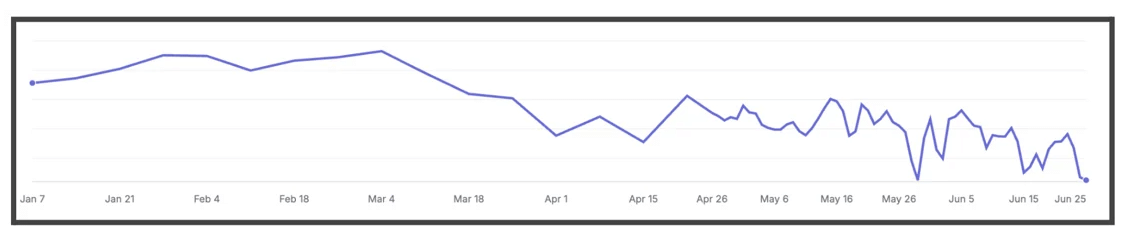
The historic GA4 tag was installed, but we were unable to convince Dealer A to republish the SEO content. The graph below shows their average Organic rankings—want to take a guess on when they migrated? (Hint: March 4th)
But wait—there’s more!
Dealer B was a 5+ year client and decided that it was time for a change—and again, a single vendor solution.
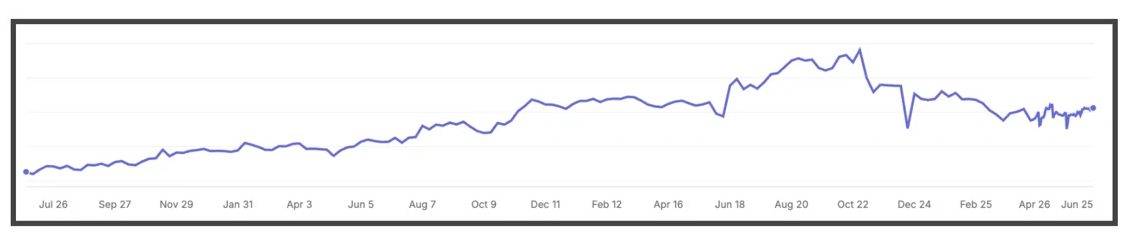
We were aware of the planned transition, but the website migration in this case did not occur while Wikimotive was still involved. A few weeks after leaving our service, their new shiny vendor convinced them to only bring over the top handful of pages to the new website, leaving behind hundreds of other authority-driving content. And as you can see from the drop on October 22nd, their average position suffered greatly for that poor decision.
Not convinced yet? No problem…
Dealer C was also a legacy client.
We had worked solely with the dealer principal for five years. A new GM came on board and convinced the DP to allow him to move all services to—you guessed it—a single vendor solution, with whom he had worked in the past.
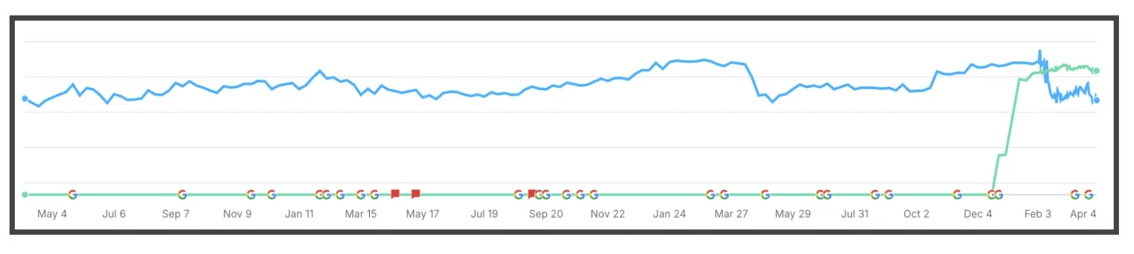
In this case, Wikimotive was still providing service to the client when they migrated, but the new vendor and new GM would not allow us website access, and chose not to migrate the content from our time together or install the historic GA4 tag. The decision to remove historic data is another huge red flag with any vendor.
While we were able to show the tanking Organic ranking results to the dealer principal, he said he had to let this new GM make the decisions if he was going to hold him accountable for results. We’re still in touch with the dealer principal, and I expect this dealership to return when the experiment has concluded.
In the meantime, a brand-new competitor has overtaken their position.
While this story is about SEO, the real takeaway I’d like you to have is that your vendors should be your partners; they should be looking out for you, your data, your historical performance, and your future results.
Sure, this is business, and it’s appealing to move to what seems to be an easier or less expensive solution. However, if a potential new vendor isn’t protecting you and your data, then you are just a number to them, and the solution will fail. The market may disguise that clarity for a time, but before long, it will be obvious.
By then, will it be too late to recover?

The Inventory Crunch
By Cody Naccarato
The longer you spend time in a dealership, the more you hear about the “good ol’ days.”
Stories of rankled golf-shirt-clad salespeople scoping out funeral homes to ask what they plan to do with the recently deceased’s motor vehicle? A dense fog of mythos surrounds the tales that make them great larks for conferences, but not great life lessons.
I thought that, at least, until I told that story to someone and they told me it might be worth exploring. We settled on leaving business cards in the entryway of the funeral home—not pestering folks at the gravesite—but it emphasized just how tight the current inventory crunch is.
Here are some thoughts to keep you from being one foot in the grave—literally!
Don’t Outkick Your Coverage
The only people right now who seem to be doing well on the new-car allocation front are the stores that had the foresight to begin construction of their new dealerships 18 months ago. If you were not one of those lucky few, you are probably grimacing at your used inventory feed, wondering how you’ll replace what you have on the ground.
LTIs and trade-ins will only get you so far, especially if you don’t have a huge book of business for lease. My advice? Start pricing your cars on the lot now to factor in the cost of replacement next month. You don’t want to outkick your coverage.
Many dealers are moving metal but can’t replace what they’ve sold. Price your cars to sit this month, and next month they’ll be priced to sell.
Buying Cars Out of Your Service Drive
What is your process for buying cars out of your service drive? Shiny, sparkling, brand-spanking-new cars are the siren song that leads sailors astray. If you keep your lot clean, your inventory spic and span, and your service drive busy, it’s inevitable that people will be tempted to look.
The lift is magical. A captive customer sitting in your waiting room has nothing better to do than at least hear a trade-in offer on their car. Once the car is up on the lift, every recommendation becomes easier: new tires become affordable, engine repairs seem palatable, and trading in seems logical. They’ve delivered their car to your lot—now all you need are their keys!
Going Once, Going Twice…
When their backs are to the wall, many are tempted to fall back into the throes of the auction.
One of my mentors in the automotive world was my old boss, Charlie, who once came back from the auction, slumped into the chair in my office, put his head down, and said, “There is no such thing as an undented can at the dented-can sale.” Prophetic.
You know the kind of car you are going to find there. You hope what you get will be better, or that it will sell quickly, like that one car did that one time. The best-case scenario is that you are buying a rental car—sloppy seconds that nobody wants. The worst-case scenario is that you end up with a dog on your lot that you overpaid for and have to pay interest on.
Avoid the auction.
Final Thoughts
You can’t sell what you don’t have, and your customers can’t buy cars if you don’t have them. My advice to everyone out there is to price conservatively. Don’t gouge your customers because you can, but factor in the cost of replacement into your inventory. Focus your efforts on cars from your service lane and customer trade-ins. And most importantly, don’t look for undented cans at the dented-can sale.
SEO First Steps
Step Six: Improving Your Headers
By Meaghan StPeter
As you continue working through the first ten steps of building a strong SEO strategy for your dealership, it’s time to focus on an important on-page element: headers.
Properly optimized headers help both search engines and humans understand your website’s content, making them an important part of creating pages that are clear, useful, and easy to navigate.
What Are Headers & Why Do They Matter?
Headers are the titles and subtitles used throughout a page to organize content into sections.
The most important header on a page is the H1, which acts as the main title and helps tell search engines and visitors what the page is about. A well-optimized H1 creates a stronger connection between your page content and your target keywords.
Creating Effective H1s
The goal of an H1 is simple: Clearly explain what the page is about while naturally incorporating the primary topic or keyword.
H1s shouldn’t:
- Be missing
- Appear more than once on a page
- Be stuffed with keywords or geos
Strong H1s should:
- Match the purpose of the page
- Include the primary keyword [when appropriate]
- Be written naturally for visitors
For dealership websites, this typically means prioritizing transactional-focused terms that align with how shoppers search. A strong H1 helps reinforce the purpose of the page and supports the overall SEO strategy.
Header Optimization is a Must!
Optimizing your headers may seem like a small technical SEO task, but it is another opportunity to improve how search engines understand your website. It is essential.
Once your H1s are optimized, you’ll be ready to move into step seven of the first ten steps: getting your schema right.