
The promise of winning AI search is a lie. That’s not a hook. That’s not hyperbole. It’s the unpopular truth that directly contradicts the story vendors are selling from every trade show booth and webinar stage.
And the narrative isn’t coming from vendors alone. It’s a commonly held assumption that, because ChatGPT and the like have become so popular, there must be business to be won or lost in this space. It’s treated like the final frontier in digital marketing, and I’m going to spell out why that’s not at all the case — at least, not for car dealers.
The AI Ranking Illusion
I get how this goes. A vendor at a trade show booth or in a Zoom demo pulls up ChatGPT. They type in a prompt like “find me the best [your make] dealer near [your location],” and you don’t show up with the prominence that you want. They tell you this means your AI optimization isn’t good and go on to say they can fix your Schema, robots.txt, and some other hocus pocus so you show up better.
The next time someone tries this trick on you, tell them to ask ChatGPT why it ranked the dealers where it did.
ChatGPT won’t say “because the top ones had the best schema data.” It’ll say that the order was not intended to be a ranking order and that the primary consideration was the reviews and star rating of the dealers mentioned.
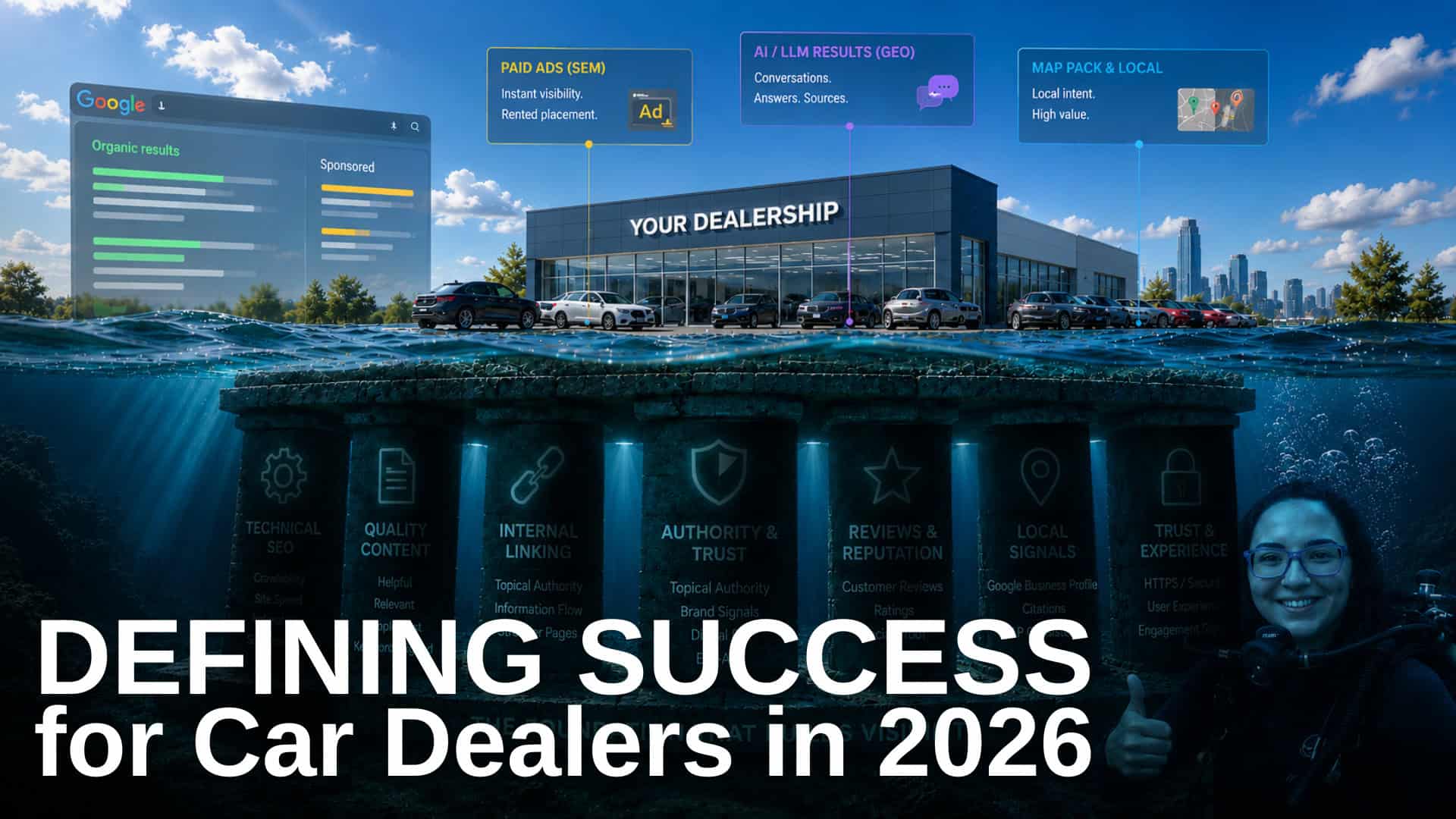
Guess what that means? If we assume for a minute that lots of consumers are using ChatGPT like this (and you shouldn’t assume this), then the key is better reviews, not the bill of goods that the vendor is promising you. Your reviews and your SEO practices are the primary influencers of visibility on the AI tools (LLMs).
AI Isn’t Where Ready-to-Buy Shoppers Convert
The reality is that, for the time being, this doesn’t matter at all. People are using ChatGPT, Gemini, Grok, and the like in huge numbers, but studies are showing that they’re not used for the last-mile transaction-oriented searches that stand to increase your leads. They’re used for high-funnel research where people are deciding which vehicle to buy in the first place.
Trying to be the answer to those questions is a poor use of your marketing budget. It positions you as a research resource, not as the dealership someone submits a lead to.
Conductor did a study in early 2026 in which they looked at 3.3 billion (yes, billion with a B) website sessions and broke them down by industry. In the industry vertical that automotive falls in, they found that 0.48% of website visits come through an AI tool. That’s backed up by the study we did at Wikimotive, which reflected an essentially identical 0.5% across a group of 150 of our dealer partners.
What Actually Wins in 2026
What’s the meaning of all this? Winning leads from consumers who are ready to submit one will not be accomplished with AI in 2026. It’ll be accomplished with tried and tested SEM and SEO, and the 0.5% of your opportunity that exists in AI tools will be captured through your SEO efforts and the reviews you earn.
There is less measurable brand visibility work to be done with LLMs, but that is also served by proper curation of your website content and citations, not shiny new products. At Wikimotive, we make sure our dealers are focused on getting the most from their marketing in search, rather than chasing shiny things. If you want to see how you stack up, reach out for our free audit on our website.