This Month from Wikimotive…
We break down what AI is actually changing, and what it isn’t. From the evolution of search to the growing gap between automation and real customer experience, this month is about separating progress from noise.
From content that needs to be faster and more accurate, to the technical issues quietly holding performance back, we’re reinforcing the fundamentals that still drive visibility and results. The playbook hasn’t changed. but the cost of getting it wrong has.
From RankBrain to GEO: The 10-Year Evolution of “Thinking” Search
By Dave Estey
In 2015, Google introduced RankBrain. At the time, it was a quiet revolution—Google’s first major foray into using machine learning to interpret search intent rather than just matching keywords.
For the first time, the “strings” of text were becoming “things” (entities). If you searched for “the small green guy with the lightsaber,” RankBrain didn’t just look for those specific words; it understood the entity was Yoda.
Fast forward to 2026, and we are living in the world RankBrain built. What we now call GEO (Generative Engine Optimization) is simply the 4K high-definition evolution of that same machine-learning logic.
Why the “RankBrain Logic” is Winning
RankBrain taught search engines to stop literal matching and start inferring. Today’s generative engines take that inference to the extreme, synthesizing answers from across the web, but the “fuel” they need hasn’t changed; they still look for:
- Entity Clarity: Just as RankBrain mapped “Yoda” to “Star Wars,” modern AI uses your Schema markup and internal linking to map your brand to specific industries and solutions.
- Intent Anchors: RankBrain was built to handle “ambiguous” queries. Modern GEO uses header hierarchies to remove that ambiguity, giving the AI a clear anchor to latch onto when it needs a definitive answer.
- Confidence Scores: AI doesn’t just want the answer; it wants to be sure about the answer. Clean technical health (fixing broken links, resolving crawl errors) provides the trust signals that tell an AI your site is a reliable source to cite.
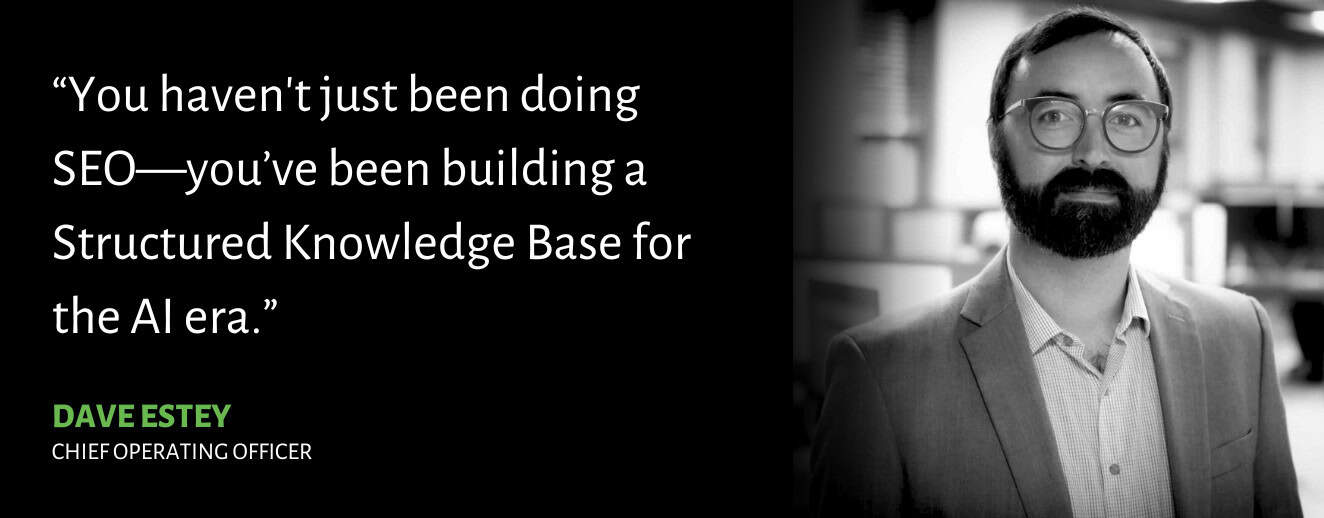
The “new” world of GEO isn’t a pivot; it’s a payoff. If you’ve spent the last decade focusing on topic clusters and structured data, you haven’t just been doing SEO—you’ve been building a Structured Knowledge Base for the AI era.
In 2015, we optimized so that Google could understand us.
In 2026, we optimize so AI can cite us.
The tactics are the same, but the stakes are higher.

Are You Driving AI…or Towing It?
From the time of the pyramids until the implementation of the telegraph, the fastest “internet” available was someone riding a horse.
One hundred years ago, horses pulled wagons full of people down the street. Today, horses are driven down the highway in $10,000 trailers pulled by $80,000 trucks. Effectively, progress retired the horse.
When AI Replaces the Wrong Things
As progress races on, many dealers have tasked AI solutions with responding to customers as opposed to a trained BDC agent.
Sometimes, this manifests as a chat tool that can’t make appointments without asking what color car you’d like. Other times, it’s an appointment-setting CRM agent who never asks when you’d like to come in.
People have been doing their best to circumvent speaking to robots since we were forced to start speaking to robots. Who among us doesn’t immediately shout “speak to a representative” when encountering a labyrinthian phone tree?
I get asked a lot about AI-generated short-form videos, where people who don’t exist drive your most popular model through the desert or into the mountains. I’d be a much bigger fan if your dealership weren’t in Kansas.
Ask your best salesperson to do a walkaround and post that instead. Short-form content works, but people can identify “AI slop” with relative ease.
Dealers are asking AI to help them craft email templates and are having people review them for clarity before sending them out. In reality, it should be the opposite: You should be writing your own email templates and then asking AI to help you review them.
Neutered, feckless, AI-generated language is not going to help you get customers in the door any more than handing out fliers at the county fair will.
Efficiency at the Cost of Experience
In the short term, AI solutions may save you some money. AI does not have a mortgage to pay; it doesn’t call in sick to work; it doesn’t need benefits. However, when you remove the humanity from your dealership, you are not considering the end client experience.
In the pursuit of progress, we committed ourselves to AI, believing it could only make our lives easier. In practice, we’ve built systems that still need constant correction, just without the accountability of a real person.
We didn’t replace ourselves like we did the horse; we just hitched AI to the back of the truck—and sooner or later, you’re going to feel the drag.

Keep Your Content Timely and Accurate
Car shoppers look to dealerships as a vital source of knowledge. Providing timely and accurate information about your products keeps customers happy, while incorrect or misleading information can result in confused customers going elsewhere.
While you likely ensure your sales team receives regular training and stays current on the products you sell, it is just as important that your website and other online communications provide the trustworthy information that car buyers are looking for.
If you can’t answer their questions, another dealer is only a click away.
Keeping Your Content Team Up to Speed
In order to keep your website accurate, it is just as crucial that your content team receives regular training and up-to-date information as your salespeople—if not more so, since the latest news in the automotive world changes more quickly than the models in your showroom.
Has a hot new model been announced? You need to capitalize on that traffic now, not wait six months for the OEM to roll out official documentation and start shipping vehicles. By that time, your competitors may have already secured their positions as authorities on the new product in the eyes of Google, making it an uphill fight for you to claim rankings.
- Make sure your content team is keeping up with the latest automotive news. Industry leaks and rumors can not only make for good blog and social media posts, but can help inform your content plan for when rumors turn into official announcements.
Timeliness Isn’t Enough Without Accuracy
In addition, content must always be accurate. Today’s car shoppers do more research than ever, and when your website provides clear, reliable information, shoppers feel confident taking the next step. However, if your website has errors, they will go elsewhere. After all, who wants to shop at a dealership that doesn’t understand its own products?
- Make sure your content team verifies everything you post and always uses reputable sources. It can be tempting to lean on AI for content, but if your content team doesn’t catch AI hallucinations, you’re setting yourself up for embarrassment and lost sales.
Timely and accurate content takes real work, but the payoff is high rankings and happy shoppers.