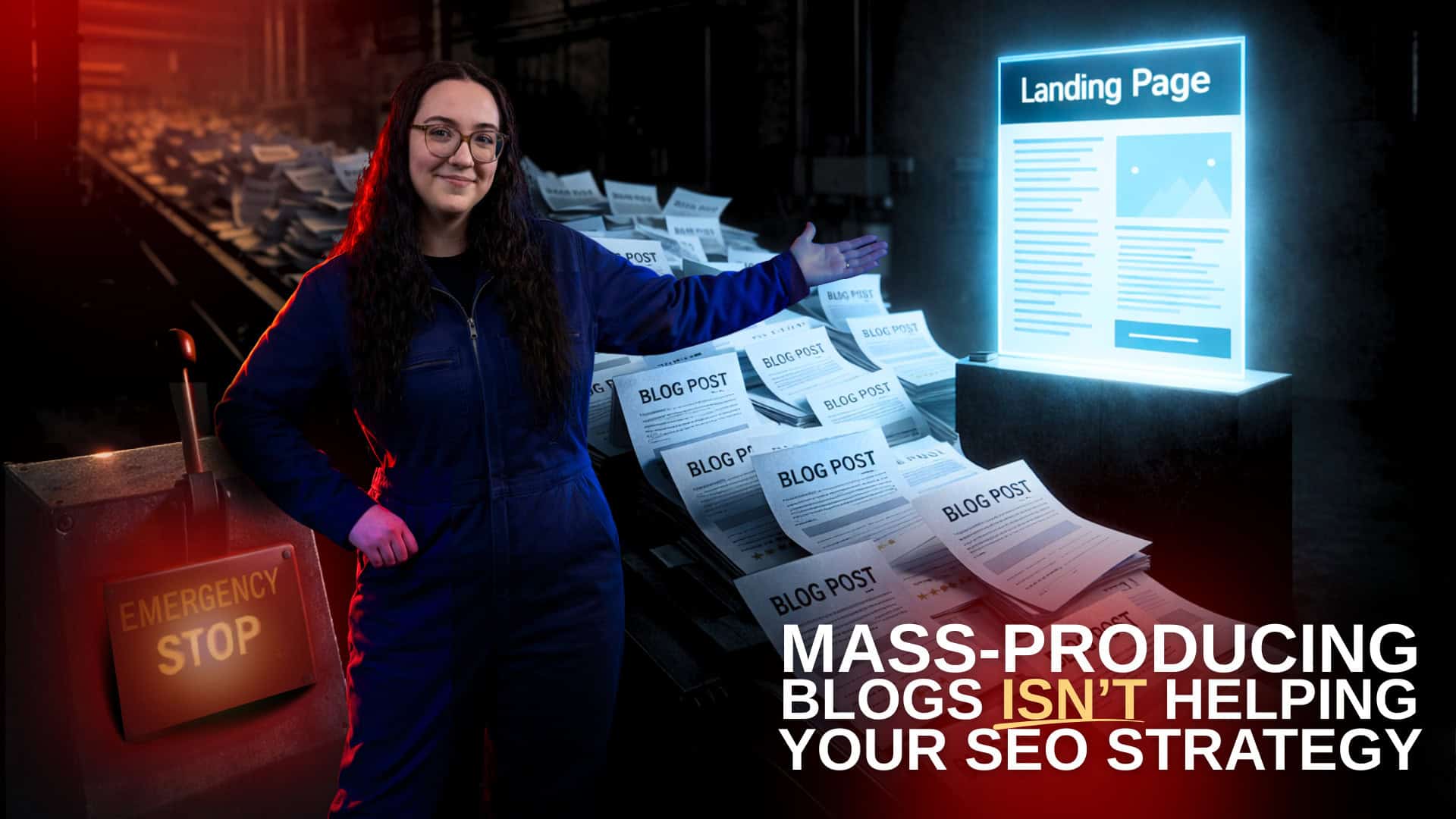
“Just write more blogs” has become default SEO advice, and back in the day, this may have worked. But in today’s day and age, blog posts are rarely what actually moves the needle. Content is the core of any good automotive SEO strategy, but not all types of content on your website are equally impactful.
Blogs play a supporting role, adding some extra linking authority, ranking for unique, long-form searches, and providing social content, but what actually leads to more transactional clicks? Landing pages and navigational pages. These are the bread and butter of strategy. Think of them as the authoritative armed forces that lead your website to high rankings.
A Look Back in Time: Why Blogs Used to Dominate
Years ago, Google could be dominated by content volume alone. The more pages on your website, the more likely you were to have SERP (search engine results page) authority. This led to websites with thousands, if not tens of thousands, of blog posts completely taking over search results. If you have blog posts on your dealership’s website that talk about “the best 10 coffee shops in Ohio” or “why hiking is fun in Montana,” they are probably derived from this old practice.
Over time, though, Google’s focus on people-first rankings has changed this. Quantity over quality has now been reversed, with high-quality content that answers real human queries driving results.
Keeping Your Eye on the Ball
When it comes to automotive SEO, the key to seeing tangible results is to rank well for transactional searches. Doing this is largely impacted by the content on your website’s core pages, such as the homepage and your inventory SRPs (search results pages), and landing pages that directly target those transactional searches, such as “Chevy Traverse for sale,” which someone who is already interested in making a purchase would search.
Those core pages already hold a lot of power, so optimizing the content on them can make great strides in your search performance. Landing pages can support those core pages via linking, but also oftentimes rank well themselves as they are pinpoint-focused on the transactional topic itself.
Blog posts typically have more niche, research-focused topics, such as “Here’s How the Chevy Traverse Keeps You Safe.” These can rank for searches like “Chevy Traverse safety features,” but those searches are much further back in the sales funnel, are highly competitive against OEMs and sites dedicated to model research, and rarely lead to an actual purchase.
If I were a dealer, I’d want to be heavily focused on the content that drives transactional clicks on my site.
Where Blogs Do Play a Role
All of this isn’t to say that blog posts shouldn’t exist in your content strategy. There are benefits to maintaining your blog:
- Blog posts can provide some internal linking authority. If your blog posts link out to your landing pages and core pages on your website, those links can help further increase the authority of your transactional pages.
- Blog posts act as good social media content. Actively syndicating your blog posts to social media can help diversify your posts and can put your name in people’s heads, generating visibility and authority long term.
- Blog posts give you the opportunity to write about niche topics. Not all content on your website necessarily needs to be SEO-focused. There is a benefit to writing blog posts about things that you want your customers to know about or that your customers may want to know. This is exactly what I’m doing right now with this blog post—informing!
When it comes down to it, blog posts do have a place in your content strategy, but they are of lesser importance to your SEO strategy in comparison to landing pages and the core pages on your website that drive transaction traffic.
Building a Smarter, More Effective Content Strategy
At the end of the day, a strong automotive SEO strategy isn’t about choosing between blogs and landing pages; it’s about understanding the role each type of content plays and choosing when to use each.
Landing and other core navigational pages are what capture high-intent searches and drive conversions, while blog posts help educate your audience, support your brand voice, and keep your dealership visible across channels. When these pieces work together, you create a well-rounded strategy that not only ranks but resonates.
If you’re looking to strike that balance and make sure your content is working as hard as it should, the team at Wikimotive can help! Contact us to start building a strategy that delivers both visibility and real results.