
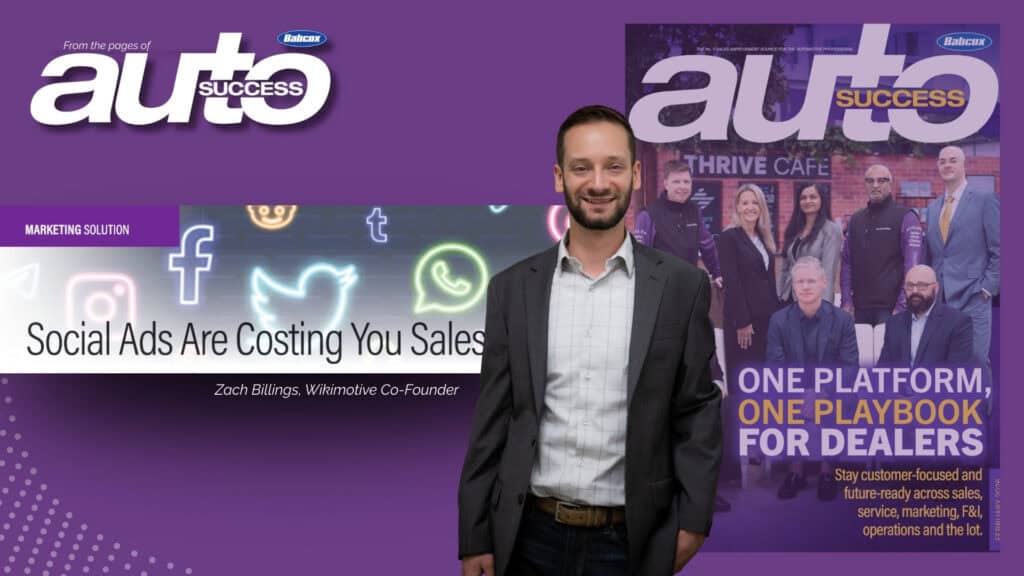
When a lot of us look at our website traffic reports, social media is a standout performer. If you’re spending any amount of money with a vendor that’s running social ads for you, there’s a good chance it’s your highest-performing traffic driver—at least by the measure of website sessions…
How about lead forms? Chats? Calls?
I talk to dozens of dealer principals and GMs every month, and probably the most common misconception created by their marketing reports is that all traffic is created equal. At the end of the day, social ads do have a place in your marketing mix, but it’s very definitely not the place you think it is. Let’s explore.
Cost Per Click
Two of the most common measurements used for paid ad mediums (think social ads and paid search) are “Cost Per Click” and “Sessions.” The former is just a measure of how cheaply you were able to acquire the latter, and when combined, they focus on driving a high volume of visitors for not a lot of money. Social ads are good at this!
For reference, paid search typically has an average cost per click of around $2.50. That means on average it takes $250 to get 100 visits to your site. Social ads drive traffic for much less; our own social ads average less than $0.20, or 1/10th the average cost of paid search. And yet, I tell most of Wikimotive’s dealers to either not run social ads or to invest in them only after more heavily funding other marketing. Why?
Cost Per Conversion
Google searchers are actively looking for a dealership or a vehicle.
If someone searched “2026 F-150s for Sale,” clicked your VLA result and landed on your F-150 VDP, there’s a real good chance you captured that conversion (lead). If they searched “Ford Dealers” and clicked on you organically, there’s a good chance they navigated to inventory or service, and you captured that lead. What about social?
When someone is “doom scrolling” Facebook or Instagram and your F-150 ad floats by, what do you suppose the quality of that interaction is going to be? If Meta’s ad algorithm did its job well and matched your F-150 to someone who might be in the market, you might get them to click and enter your website. That’s great, and you can get a lot of people to take that step cheaply.
The issue is that the person wasn’t invested in that clickthrough. They weren’t searching for dealers or trucks at the time. They were scrolling on their lunch break or at home on the couch, and they usually aren’t ready to take a committal action like submitting a lead. For this reason, the average conversion rate for social ads is under 1% in automotive, while paid search is 5-7% and low funnel organic search is 6-10%.
Weighting Your Budget
When thinking about how to best deploy your marketing budget, it’s important to look beyond traffic volume and at what the traffic is doing. It’s tempting to go all in on social ads traffic that looks great in a report, but all too often we see dealers allocating more budget here than they should. The result is choking off the budget that should be going to paid search (SEM) or, even more so, the very underfunded area of SEO. Traffic can create confirmation bias that leaves you scratching your head, wondering why you get so much traffic but the showroom is still empty.
Social ads have their place, but as icing on the marketing cake. They can pull a new person into the market, but they catch a lot of unwanted fish in that big net. Look carefully at the details of your traffic reports to see how many forms, chats and calls your social ads are generating. There’s a good chance that after looking at this, you’ll want to reallocate your spending.
Need help? Wikimotive offers free help evaluating this and more in your marketing. Just reach out on our website, and we’ll set you up with a quick traffic evaluation session. No pitch required!