This Month from Wikimotive…
Dealers are producing more content than ever, and many are seeing less from it. Not because content doesn’t matter, but because it’s being built without the foundation that makes it work.
From who’s representing your store to how customers experience and evaluate it, we’re breaking down the signals that actually drive visibility, trust, and conversion. The fundamentals are still doing the heavy lifting, whether you’re paying attention to them or not.

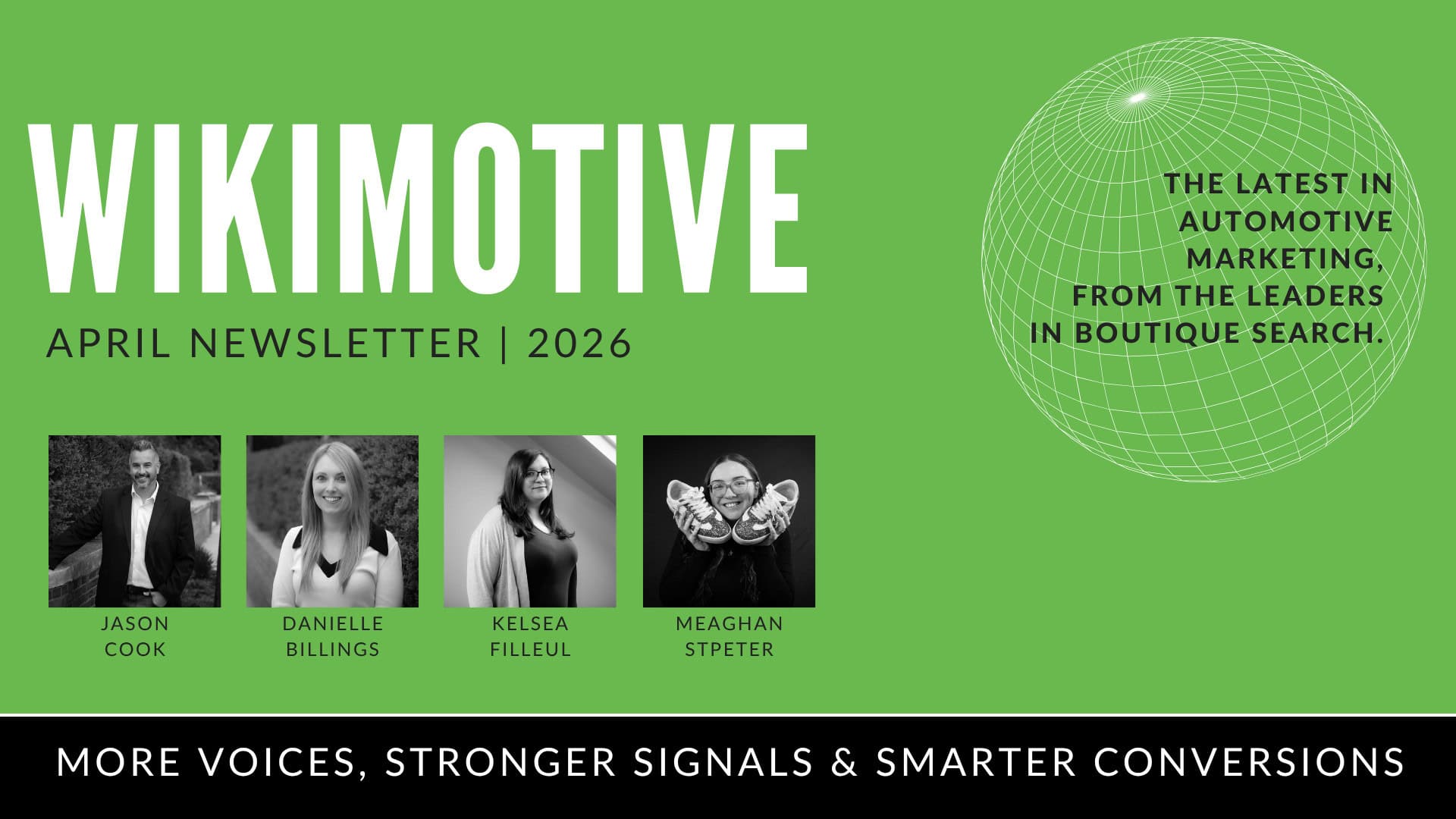
The Problem Isn’t Your Content, It’s How Few People Are In It
By Jason Cook
With nearly a decade of Wikimotive’s multimedia content behind me, I find myself reflecting on what we continue to build: an ever-evolving library of dealer resources powered by an ever-changing lineup of in-house talent, in formats and platforms selected to best showcase each of our contributors.
From across the conference circuit, our team has shared instances of meeting a new face and hearing, “Wikimotive? I feel like I see you guys everywhere!”
(Spoiler: They do—and I’ll make no apologies for it.)
But why should any of that matter to you, the dealer?
The simple reality is this: In the digital marketing landscape of 2026, your content is more important than ever. From social media content to blogs to OTT and beyond, your content informs public perception and can amplify many of the things that set your store (and the experience you offer) apart to a wider audience.
Some of you embrace this. Some of you consider content a necessary evil. Some of you fail to see the value—or the ROI—for the time and resources invested, and there’s an argument for either perspective based on the priorities of your store.
What there’s no defense for is holding content back because it feels like it’s too much to rest on the shoulders of those you’ve positioned as the “face,” “brain,” or “name” of your store.
Look at the team around you.
You’re sitting on a built-in network of knowledge, perspective, and real-world experience that matters to your customers. If you’ve done your job, if you’ve built the right culture and developed your people, you’re already aligned on values and fundamentals. So why limit your voice to just one person?
The traditional “face” of the store might not resonate with every audience, could be burdened by too many demands, or risk overexposure. That’s not a flaw; it’s a limitation of scale.
But a new voice? A fresh perspective aligned with your objectives? Someone closer to the day-to-day experience of your customers? That’s where new connections are made, creating familiarity for an entirely new demographic of customers to walk into your showroom.
Trust your team. Amplify their voices. Educate your customers.
Become the store people can’t ignore because, everywhere they look, you’re already there.

Reviews: The Heart of GEO Visibility
In today’s market, AI is dominating the conversation, but it can be hard to separate the promises from the proof. Many vendors are claiming to have the “AI product” that fixes all of your problems—but the real question is, what actually matters?
While new AI tools and services sound appealing, the reality is that, in our current digital marketing landscape, one of the most important factors that play into your GEO visibility—if and how you show up in AI-driven search—is your own store reviews.
Although this may not seem as flashy and easy as some of the other solutions, the truth is that consumers care about the reputation of the place they are going to do business with. They expect to be treated well.
When you search for the “Best Ford Dealer in Dallas” using ChatGPT, you are going to see results based most heavily on what people have to say about the Ford dealerships in the area. AI-driven search (such as ChatGPT, Gemini, etc.) uses aggregated web signals, including reviews across multiple platforms. GBP is one of the largest review platforms, but AI-driven search will also reflect signals from other sources, such as Yelp, social media, and even sources such as Cars.com and DealerRater.
Customer sentiment and pricing transparency are two common patterns in AI-generated recommendations. Specifically, the algorithm wants to see mentions of “transparent pricing, no pressure, and quick process.” It values consistency across platforms. Instead of prioritizing a single source (GBP, Yelp, social), consistency across platforms matters more.
The takeaway here is simple but may not be the flashy solution you were hoping for. If your reviews stagnate, so will your visibility. Your reputation is extremely important; make sure your customers leave happy and express that happiness across multiple channels. Take the time to understand what people are saying about your dealership and respond to those reviews.
AI has not changed the game; it has just amplified some of the same SEO signals that already mattered.
What Are the Elements of a Good Landing Page?
We’ve talked a lot about why landing pages should take priority over blog content in a strong SEO strategy, but that raises an important question: What actually makes a landing page good?
At its core, a good landing page comes down to one thing: matching the intent of the keyword.
Think about a keyword like “Chevy dealer” (or substitute your own brand for this exercise). What is someone really looking for when they search that keyword? They’re not looking for a history lesson on Chevy; they’re looking for a place to buy or service a vehicle. That intent should shape everything on your page.
Your landing page should focus on the key decision-making factors:
- Your selection of new and used vehicles.
- What makes your dealership the best choice in your area.
- The benefits of servicing a vehicle with your team.
- How you simplify the more stressful parts of the process, like financing.
This is where you separate yourself from your competitors. Your inventory, your value propositions, and your expertise are what ultimately push someone to choose your dealership over another.
You should also consider the specific models shoppers may have in mind. Including key vehicles—like the Silverado 1500, Equinox, or Trax—helps establish authority and gives direction to shoppers who may not have decided yet. While this shouldn’t be the main focus of the page, it plays an important supporting role in both credibility and conversions.
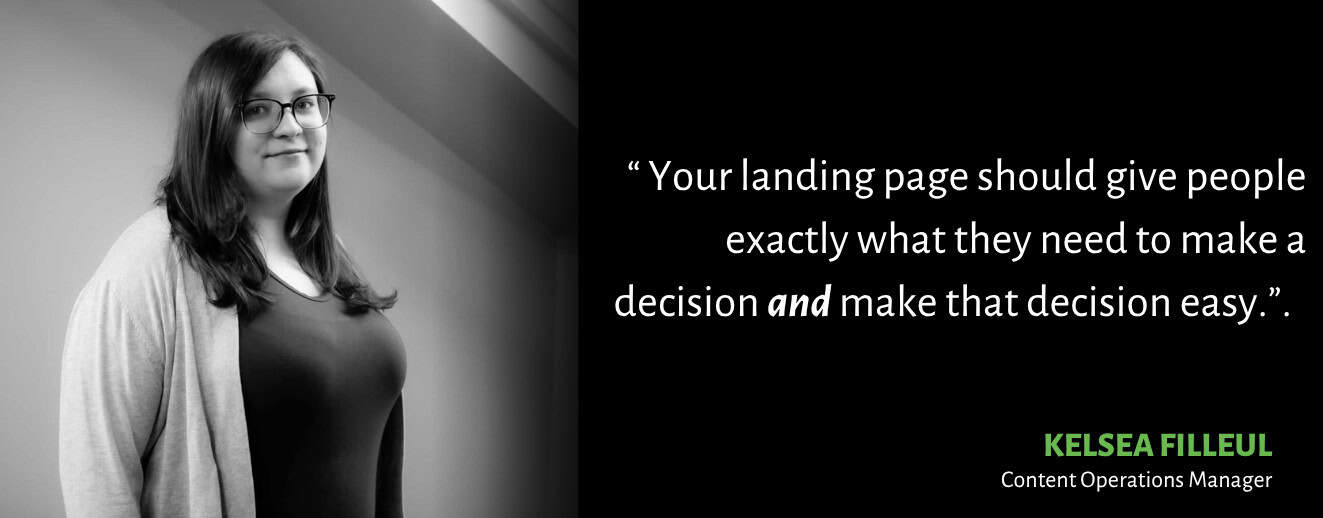
At the end of the day, your landing page should give people exactly what they need to make a decision and make that decision easy.
Step Three: Mapping Out a Keyword Strategy
Content is the core of any solid SEO strategy as it helps build authority for the terms that drive meaningful traffic to your dealership’s website. But not all content is equal; the keywords you target make a huge difference, which is why mapping out a keyword strategy is essential in the early stages of optimizing your site for search.
First, Determine Your Priorities
While much of keyword strategy is determined by data, when you’re getting started, it’s still important to start with the basics: What matters to you?
To make this easy, you should make a note of your dealership’s
- Priority models;
- Priority geo targets;
- Priority on new/used/fixed ops strategy.
Pulling this information together in one place will make it easier to ensure you’re taking into account your dealership’s unique needs and data.
Then, Make Educated Choices
With your priority lists gathered, it’s time to start mapping out keywords. Basics like “[MAKE] dealer” and “[MAKE/MODEL] for sale” should come first. Pages that target these keywords are called “hubs” and help give you a foundation on which you can build authority.
Once you have those core hub pages in place, you can begin working on geo-targeting, prioritizing the areas in which you aren’t showing up in search. This means targeting those same keywords but with geos tacked on the end, such as “[MAKE] dealer in [GEO]” and “[MAKE/MODEL] for sale near [GEO].” These pages help build authority for those core terms in your specific geo targets.
Tying in Keywords and Content
Using your priorities and data together to find transactional-intent keywords is the best way to build a strong keyword strategy. Want to know how to build strong content to support these keywords? Read next month’s newsletter, where I’ll go over step four of the first ten steps: Content, Content, Content.